
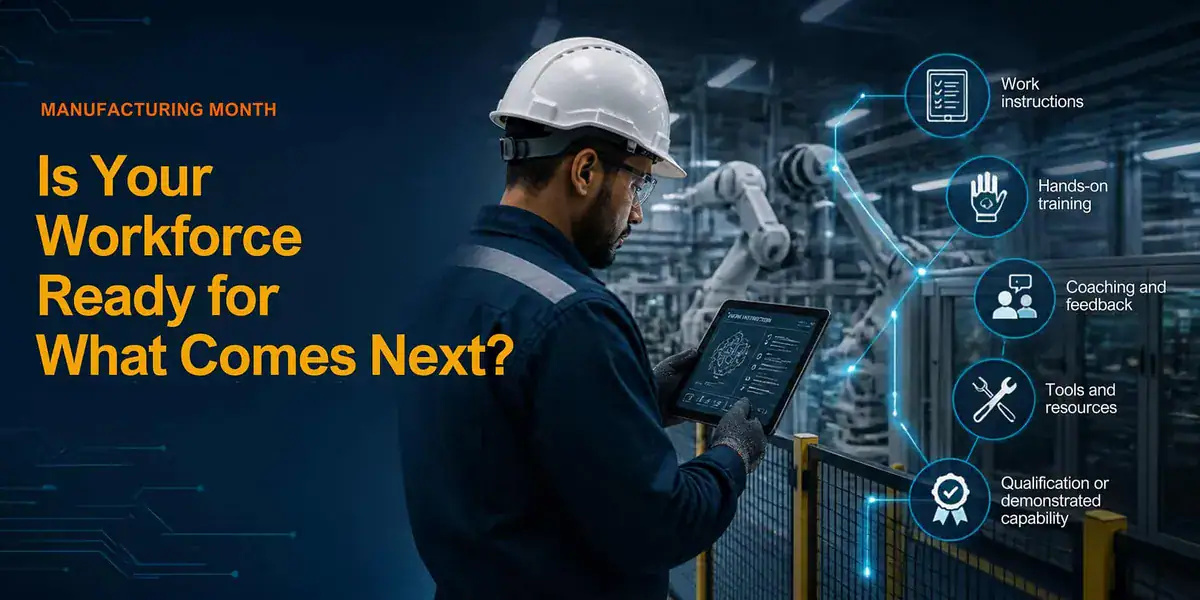
Manufacturing Month celebrates the people, technology, and ingenuity that keep the industry moving. It also creates a useful moment for leaders to ask a forward-looking question: Is our workforce prepared for what comes next?
Manufacturers are adopting new equipment, automation, digital systems, and artificial intelligence while responding to changing customer expectations and workforce needs. These investments can create real opportunities. Yet technology delivers value only when people can use it safely, accurately, and consistently.
Workforce readiness is the ability of employees to perform the work the business needs today and adapt as that work changes. It depends on more than training. Employees also need clear expectations, usable documentation, effective tools, timely feedback, and a work environment that supports the desired results.
Why Is Workforce Readiness Important in Manufacturing?
In manufacturing, small gaps can have significant effects. An unclear setup step can contribute to lost time. An outdated work instruction can lead employees to follow different methods. A new system can add complexity if roles, decisions, and handoffs have not been defined.
These are not always employee motivation problems, and they are not always training problems. They may reflect a gap between what the organization expects and the support employees have to meet that expectation.
A practical readiness review starts with the work itself:
- What must employees produce or do?
- What does safe, accurate, and acceptable work look like?
- Which decisions can employees make independently?
- Where should they stop and ask for help?
- What information, tools, and feedback do they need while working?
Clear answers help leaders distinguish a verified knowledge or skill gap from a process, resource, communication, or accountability issue. This cause-based approach is consistent with Radcom’s guidance to define the expected work before deciding whether training is the right solution.
Why Does New Technology Require More Than Technical Training?
When a manufacturer installs a new machine or introduces a digital tool, training is often the first solution considered. Training may be essential, but a course alone does not ensure successful work.
Employees may also need role-based procedures, visual work instructions, quick-reference job aids, guided practice, and a practical evaluation before they work independently. Supervisors need clear standards for coaching and verifying job performance. Maintenance, engineering, quality, and operations may need defined boundaries for who handles a task or decision.
The goal is not simply to explain how a technology works. The goal is to help each employee use it correctly in realistic job situations.
That distinction matters. Awareness is not ability. An employee may understand a presentation and still be unprepared to complete a setup, respond to an abnormal condition, troubleshoot a problem, or recognize when expert support is required.
Radcom recommends following this same principle by connecting role expectations with hands-on practice, job aids, practical qualification, records, and ongoing support.
How Can Manufacturers Preserve Critical Knowledge?
Preparing the future workforce includes attracting new talent, but it also requires capturing the knowledge already present in the organization. Experienced operators, technicians, engineers, and supervisors often know details that are missing from formal documents. They understand unusual conditions, warning signs, decision points, and the practical reasons behind important steps.
When that information exists only in someone’s memory, it is difficult to teach, scale, or sustain. It can also create dependence on a few go-to employees.
Knowledge transfer turns individual experience into an organizational resource. A focused approach may include observing the work, interviewing subject matter experts, comparing actual practices with approved requirements, and organizing validated information into usable resources. Those resources might include manufacturing and maintenance work instructions, checklists, troubleshooting guides, job aids, or structured on-the-job practice.
Good documentation is not a substitute for experience. It gives experience a reliable foundation. It also supports onboarding, cross-training, coaching, and consistent execution across employees, shifts, or locations. Documents should be well organized, well designed, and structured so the intended user can understand and apply the information.
When Is Training the Right Solution?
Training is appropriate when employees need knowledge or skills they do not yet have. For example, a new operator may need instruction, demonstration, supervised practice, and an observed qualification before working independently. An experienced technician may need targeted practice after a machine modification or procedure change.
Training is less likely to solve the problem when employees already know what to do but face barriers such as:
- Unavailable tools or information
- Conflicting priorities
- Unclear responsibilities
- Limited feedback
- An inefficient workflow
Before developing another course, leaders should define the desired business result, clarify what employees must do differently, and identify what is helping or interfering with that work.
Then they can choose a response that matches the cause. The solution may include training, but it could also require updated documentation, better access to information, clearer expectations, manager coaching, or a process change.
How Can Manufacturers Build a Workforce-Ready System?
Workforce readiness becomes more sustainable when training, documentation, and day-to-day operations reinforce one another.
Start by connecting business needs to observable job expectations. Identify the critical tasks and decisions for each role. Confirm that procedures and job aids reflect the approved work. Provide realistic practice, then verify that employees can perform to the defined standard.
The system also needs a way to stay current. Equipment changes, process revisions, incidents, quality findings, and employee feedback can all signal that training or documentation should be reviewed. A change should prompt a deliberate decision about who is affected, what support is needed, and how readiness will be confirmed.
Manufacturing Month is a celebration, but it can also be a catalyst. As we wrap up the month, let’s continue to increase awareness of the industry’s value to the economy. The broader conversation inspired by this month also emphasizes skills development, talent pipelines, and workplaces where people can thrive.
This is an opportunity to recognize the expertise already in your workforce and strengthen the systems that will carry that expertise forward. Radcom helps manufacturers connect business needs with the work employees must perform, then develop the training, technical documentation, and performance support that make successful work easier to repeat. If your organization is introducing new technology, preparing for growth, or trying to preserve critical knowledge, let’s start with the work and build the right support around it.